PVC vs WPC Wall Panels – Key Differences Explained
Table of Contents
ToggleWhich Wall Panel Should You Choose?
Ever walked into a room and felt like something about the walls just changes the whole mood, even if you can’t explain it properly? That’s usually where wall panels come in. And then comes the confusion — PVC or WPC? Both look good on the surface, both are used in modern interiors, but they don’t really feel the same once you understand them a bit.
This topic comes up a lot in homes, offices, and even shops where people want a clean wall finish but don’t want to overthink maintenance or long-term use. Some go for PVC wall panels, others prefer WPC wall panels, and honestly, both have their own kind of logic behind them. The tricky part is knowing what actually fits your space, not just what looks good in a picture.
In this blog, we’ll go through both in a very simple way. Nothing technical or heavy. Just real differences, how they behave in daily use, where they usually work better, and what people normally notice after installing them. By the end, you’ll have a much clearer idea without feeling confused between the two.
What PVC Wall Panels Actually Feel Like
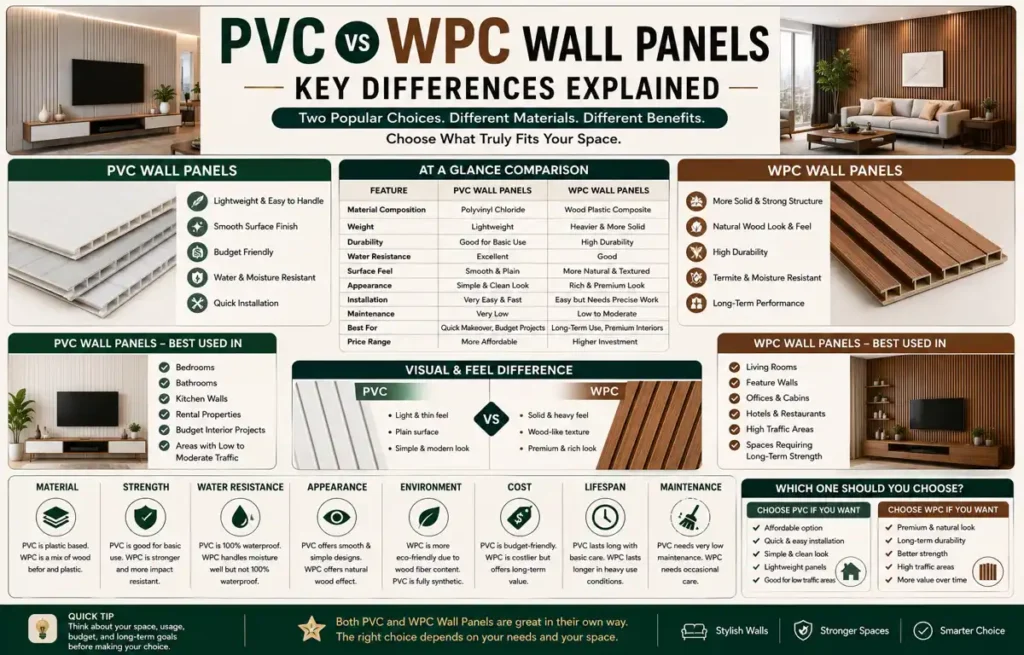
Luxury PVC panels are often the first option people see when they start looking at wall designs. They are light, simple, and usually easy to handle. Most people like them because they don’t feel complicated. Once it’s installed, you get this kind of smooth surface that sort of instantly changes how a wall looks, not really with too much effort.
In day-to-day use, PVC panels feel more like a practical option rather than a luxury kind of thing. They’re frequently chosen for a fast upgrade or for a place where you just want the finish to look tidy, without going too deep into the material thinking. So you end up seeing them a lot in quick renovation runs, where the goal is mostly “done and good enough” and not a whole lot of deliberation.
- PVC panels feel lightweight and easy to work with, which makes them suitable for faster interior updates without heavy effort or long planning
- They usually give a smooth wall finish that improves the visual appearance of a room without changing the core structure of the wall
- Most people choose PVC when they want a simple interior upgrade that does not require complex handling or deep installation work
- They work well in areas where basic wall protection and clean appearance matter more than heavy decorative detailing or strong material feel
What WPC Wall Panels Feel Like in Real Use
WPC panels seem a bit more solid when you compare them to PVC, there’s a slightly stronger feel to it, not just in theory. They often get picked for areas where folks want a steady, durable wall finish that lasts longer than usual. They don’t just focus on looks, but also on structure.
In real life use, WPC gives a more grounded feeling. It doesn’t feel light or temporary. That’s why many people prefer it in spaces where walls need to handle more activity or where a slightly more premium interior feel is required.
- WPC panels feel more solid compared to PVC and give a stronger surface presence in interior wall applications
- They create a slightly richer wall appearance that fits well in spaces where design and durability both matter together
- Many people prefer WPC when they want something that feels more stable and less flexible in long-term use
- They are often used in areas where wall surfaces need to stay consistent even with regular use or environmental changes
Basic Difference Between PVC and WPC Panels
At first glance, both panels might look similar once installed on a wall. But once you really compare them in day to day use, the difference starts to feel way more noticeable. It’s not only about looks, it’s also about how they kind of behave over time and whether that stays consistent or not.
PVC is more on the light and kind of simple side, while WPC feels a bit more solid, and structured. One is more about easygoing handling, the other leans more toward long term stability. That’s usually where people start making their decision depending on what kind of space they are working with.
- PVC gives a lighter and simpler wall finish while WPC gives a more solid and structured surface feel in interiors
- PVC is usually chosen for quick visual improvement while WPC is picked for more stable long-term wall use
- WPC tends to feel slightly more premium compared to PVC in overall wall presence and visual depth
- Both work well depending on whether the priority is easy handling or stronger wall structure over time
PVC Wall Panels in Home Use
In home interiors, PVC panels are often used when people want quick improvement without too much change. They are especially common in areas where cleaning and basic look matter more than heavy design depth, like you know it’s mostly about how things feel day to day.
They also work well in rooms where walls might need an occasional refresh or where budget friendly tweaks are the goal. The attention is usually on making everything tidy, without going deep into every single little detail.
- PVC panels help create a clean wall look in homes without requiring major renovation work or complex design planning
- They are commonly used in areas where simple and easy maintenance is preferred over heavy decorative wall finishes
- Many homeowners choose PVC for spaces where quick visual improvement is more important than long-term structural depth
- They work well in residential interiors where lightweight materials make updates easier and more flexible over time
WPC Wall Panels in Home and Office Use
WPC panels usually show up in spaces where people want something a bit more solid. In homes, they are often used in feature walls or main living areas. In offices, they help create a more structured and slightly more professional look.
They don’t feel temporary. Once installed, they give a steady visual presence that stays consistent over time. That’s one reason they are often preferred in spaces where design is meant to last longer without frequent changes.
- WPC panels are often used in living areas where a more stable and visually strong wall presence is preferred
- They help create a more structured interior look that fits both home and office environments in a balanced way
- Many people choose WPC for spaces where long-term wall design consistency is more important than quick changes
- They are suitable for areas where both appearance and durability need to work together in daily use conditions
Maintenance Difference Between PVC and WPC
Maintenance is where people start noticing small but important differences. PVC is usually easier to handle because of its lighter surface nature. WPC, while still kind of manageable, feels a little more solid and it needs a bit more attention depending on how much you use it.
Neither of them is hard to maintain, but the way you clean them and the way they behave over time it’s slightly different. That’s where the choice starts to matter more in real life, honestly.
- PVC panels are easier to clean because their smooth surface does not hold much dust or marks during regular use
- WPC panels also stay clean but may require slightly more careful wiping depending on wall placement and exposure
- Both materials support simple cleaning routines without needing strong chemicals or complicated maintenance steps
- Regular light care helps both PVC and WPC maintain their original wall appearance for a longer period
Which One Feels Better for Long-Term Use
This is usually where people get stuck. PVC can feel way easier at the start, while WPC feels stronger as time goes on. So it’s not exactly “which one is better”, it’s more like what kind of space you’re building in the first place.
If you’re aiming for a quick shift ,and a simple finish, PVC will usually handle it. If you want a more steady wall look, that stays pretty consistent, then WPC makes more sense. Both get used a lot, it’s just that the uses are a bit different in practice.
- PVC works better for simple interior updates where quick visual improvement is the main goal
- WPC works better for spaces where long-term wall stability and consistent appearance are important
- Both can fit modern interiors depending on how much importance is given to structure and feel
- Final choice usually depends on how the space will be used over time rather than just initial look
Final Thoughts
When you look at PVC and WPC side by side, the difference is not that complicated, but it gets clearer once you start thinking about real use instead of only the look. One of them is lighter and more pliable , the other gives you that more solid and steady feel.
In everyday interiors, both have their place. It’s not about choosing the “best” one in general, but choosing what actually fits your wall, your usage, and how often you plan to change your space. Once that part is clear, the decision becomes much easier.
Related Wall Décor Guides 👇🏻:
- Top 10 Modern Wallpaper Designs Trending in Dubai Homes 2026
- How to Clean Exterior Wall Cladding
- Wall Cladding Maintenance Tips
- How to Choose the Perfect Wallpaper for Your Dubai Apartment
- How to Install Wall Panels in Dubai?
- Why Brick Wallpaper Has Become the Hottest Interior Trend in Dubai Apartments and Villas
- 5 Best PVC Wall Panel Colors for Modern Interiors in UAE
- How Much Do PVC Wall Panels Cost in UAE?
- Best PVC Wall Panels in Dubai 2026 – Reviews & Buying Guide
- Cheap vs Premium PVC Wall Panels: Which Is Worth Buying?